Where does an online shop lose the sale?
A studio concept for an invented clothing brand, never built for a client. Its sales figure is an illustrative projection, not a result, and its assumptions are stated beside it on this page.
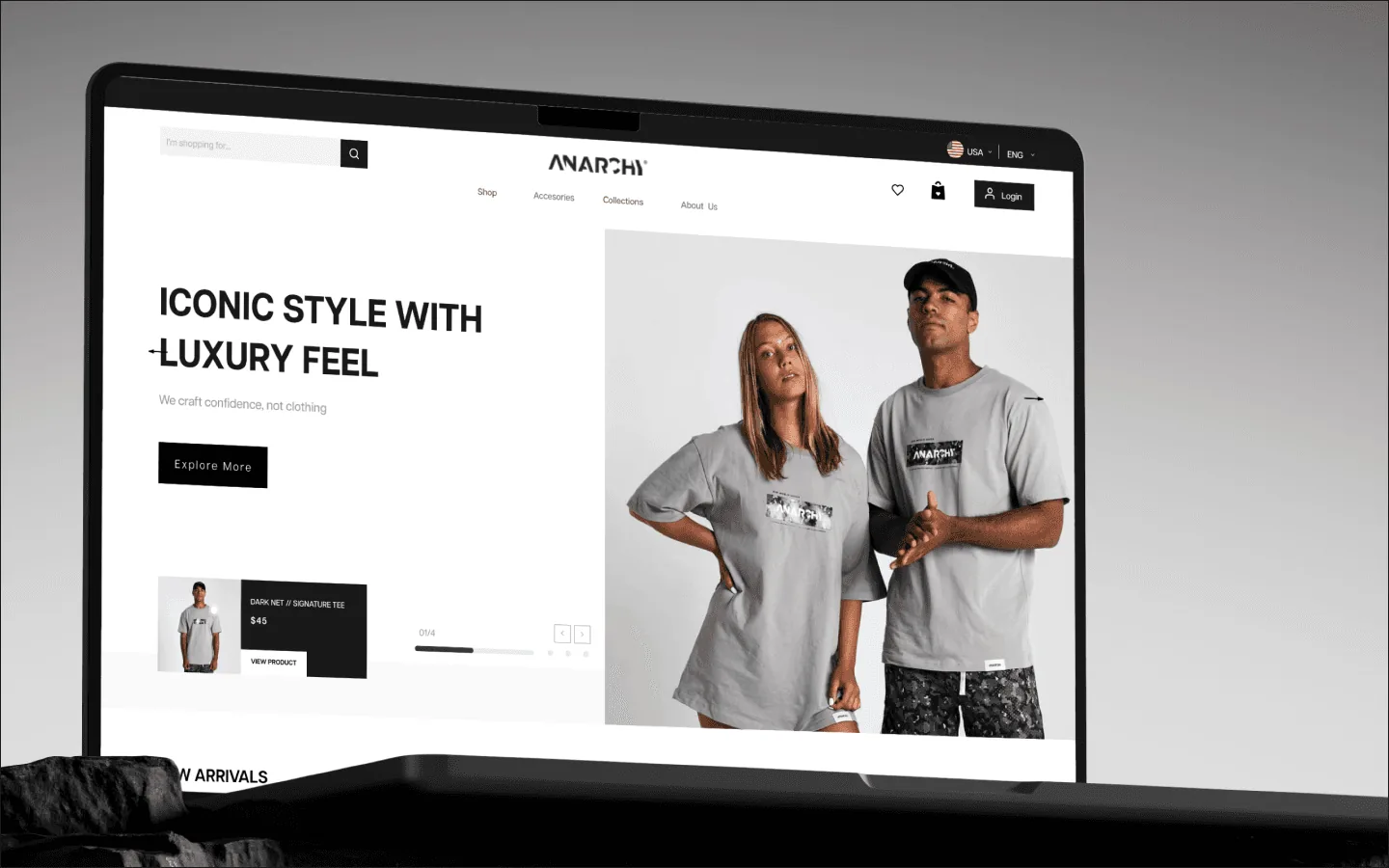
- Our role
- Self-initiated brand, store and checkout concept
- Scope
- An identity, a home page, a category page, a product page and a cart
- Constraint
- The four things a clothing buyer abandons a cart over: fit, shipping cost, returns and being made to register
- Disciplines
- Website design and build, Branding and identity
- Year
- Studio concept
- Status
- Concept
Three decisions, and why
This is our recommendation for the sector, worked through as a concept. Nothing here was built for a client.
Decision 1: Size guidance on the product page, giving the measurements of the garment rather than only a letter.
Decision 2: Shipping cost and delivery window shown in the cart, before the payment step rather than inside it.
Decision 3: The returns policy in one sentence on the product page, with a link to the full terms.
Also in the build
- One checkout screen with guest payment, because making an account is a reason to leave.
- Product photography on one consistent set, so a grid of items reads as a single collection.
- Stock state shown per size, so a visitor never reaches the cart for something nobody can ship.
A projection, and what it assumes.
The original concept carried a sales figure. It is an illustrative projection from the concept. It is not a measured client result, and no store has been measured against it.
sales: an illustrative projection, not a result
What the projection assumes
- The starting point is a store with no size guidance, revealing the shipping cost at the payment step.
- Traffic is unchanged, so the whole projection comes from conversion rather than from more visitors.
- The catalogue is large enough that better browsing changes what a visitor finds.
- Stock is available in the sizes the guidance tells people to order.
Read this as
Read the figure as the concept's goal, not as a result. Where we have real client numbers they carry a client name, a window and a date — see the Orient Barber Shop case study.
The plates
More of the work. Each caption says what it shows and when it was captured.
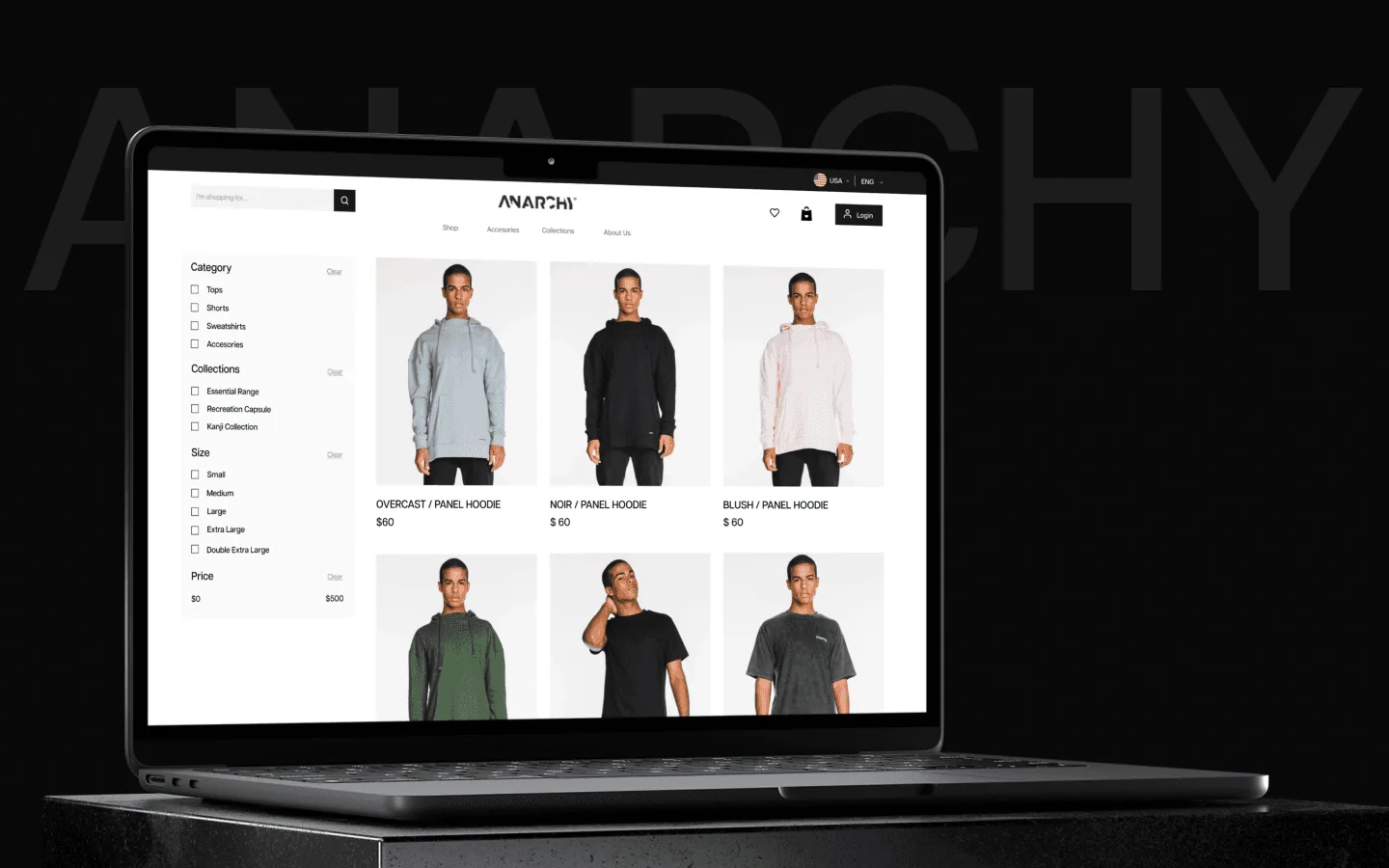
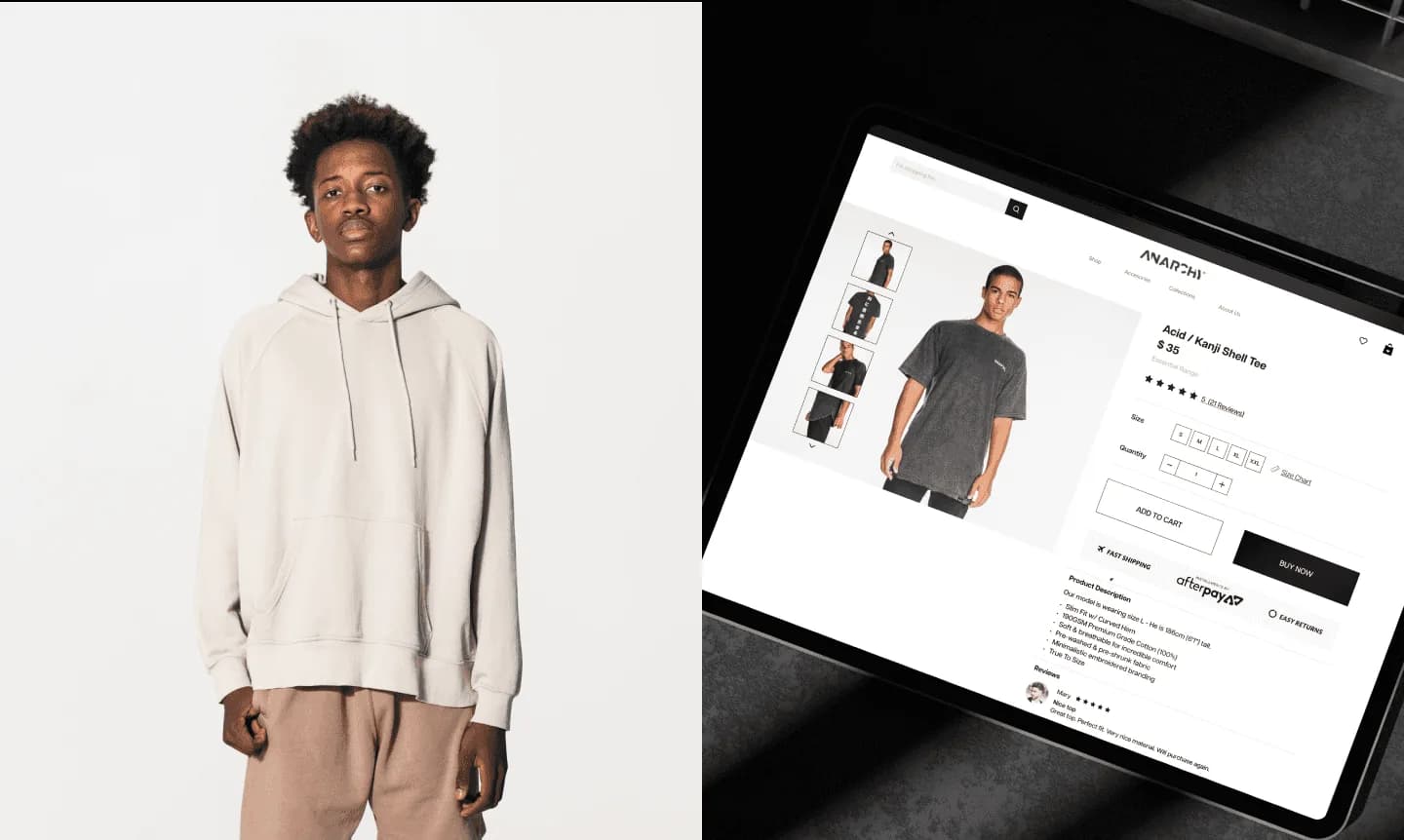
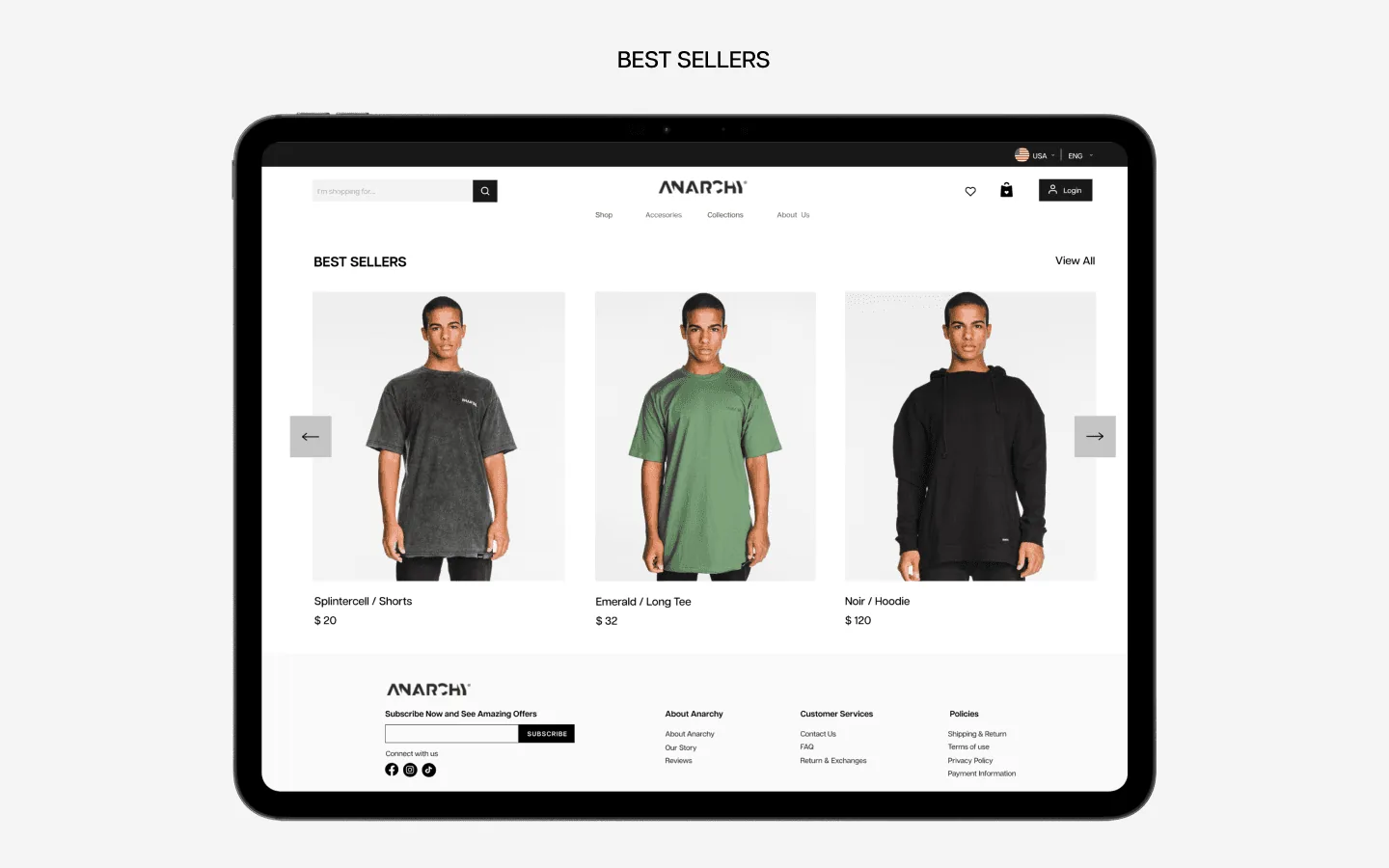
Limits- An invented business; no client commissioned it.
- Nobody has used it; nothing was tested with customers.
- Any figure is a projection, not a measurement.
What was checked
- The concept can be checked against itself and against published guidance, and that is all. Each of the four recommendations answers a documented abandonment reason — garment measurements rather than a letter, shipping cost before the payment step, the returns policy in one sentence, and guest payment — and stock state is shown per size so a visitor cannot reach the cart for something nobody can ship.
The limits of that
- No client commissioned it and no business has been measured against it. Any figure on this page is a projection, and its assumptions are printed with it.
- Nobody has used this. No shopper has been observed, and there was no usability testing, because there is no store.
- The sales figure is an illustrative projection from the concept with the four assumptions printed on this page. It is not a measured result.
- The projection assumes traffic is unchanged, so it rests entirely on conversion — an assumption no real store has tested here.
- Prices, product names and photography in the plates are illustrative, not any retailer's catalogue.
What we did not do
- We did not build a store. There is no platform, no catalogue and no transaction behind these screens.
- We did not use a real brand. Anarchy is invented so the concept had something to be designed for; its identity is in the brand archive.
- We did not test the checkout. A one-screen guest checkout is the recommendation, not a measured improvement.
- We did not present the projected sales figure as a result, here or on the card that links to this page.
Run an online shop?
Send us the product page that sells least. We reply in writing with where the sale is lost.