{UX & UI product design}
UX/UI design for apps and products
We design the flows, screens and component library for your app or software product, then hand your developers a file they can build from without guessing.
From $850 CAD, plus HST · Quoted after a 30-minute call for work outside a package
- Who it is for
- Startups and software teams with developers waiting on screens, a first version to shape, or a raise that needs the product to hold up.
- What you get
- Flows, wireframes, high-fidelity screens, a component library and a developer handoff.
- First sprint
- Agreed in the written quote
{Examples, labelled}
Product work, labelled for what it is.
One paid engagement re-drawn at the client's request, one studio concept, and the shape of the work under NDA.
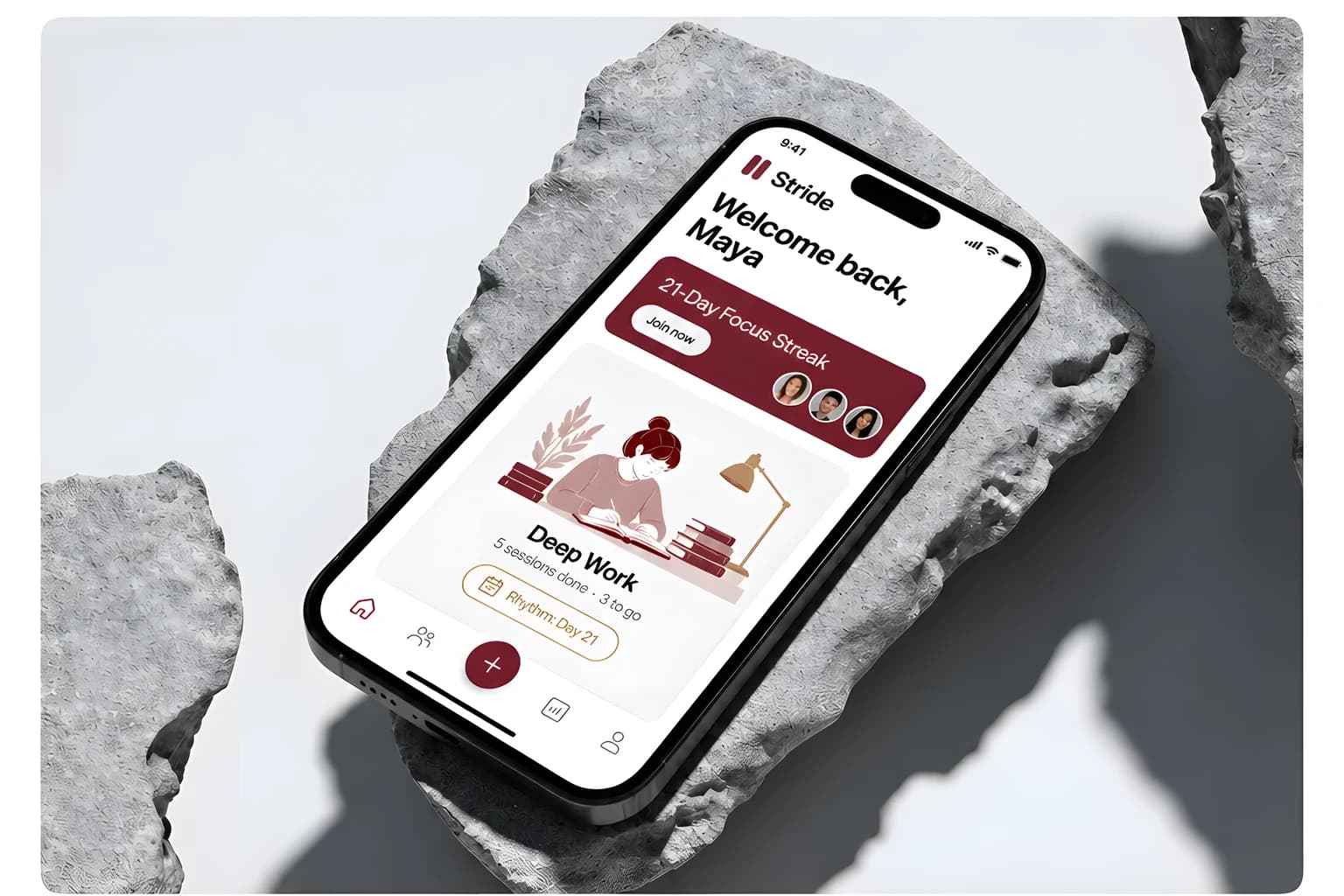 Client work, anonymised · Product designStride
One clear next study session on the first screen, with onboarding, intake and the daily plan built to support it.
What changedNone claimed. The client asked not to be named.
Explore the project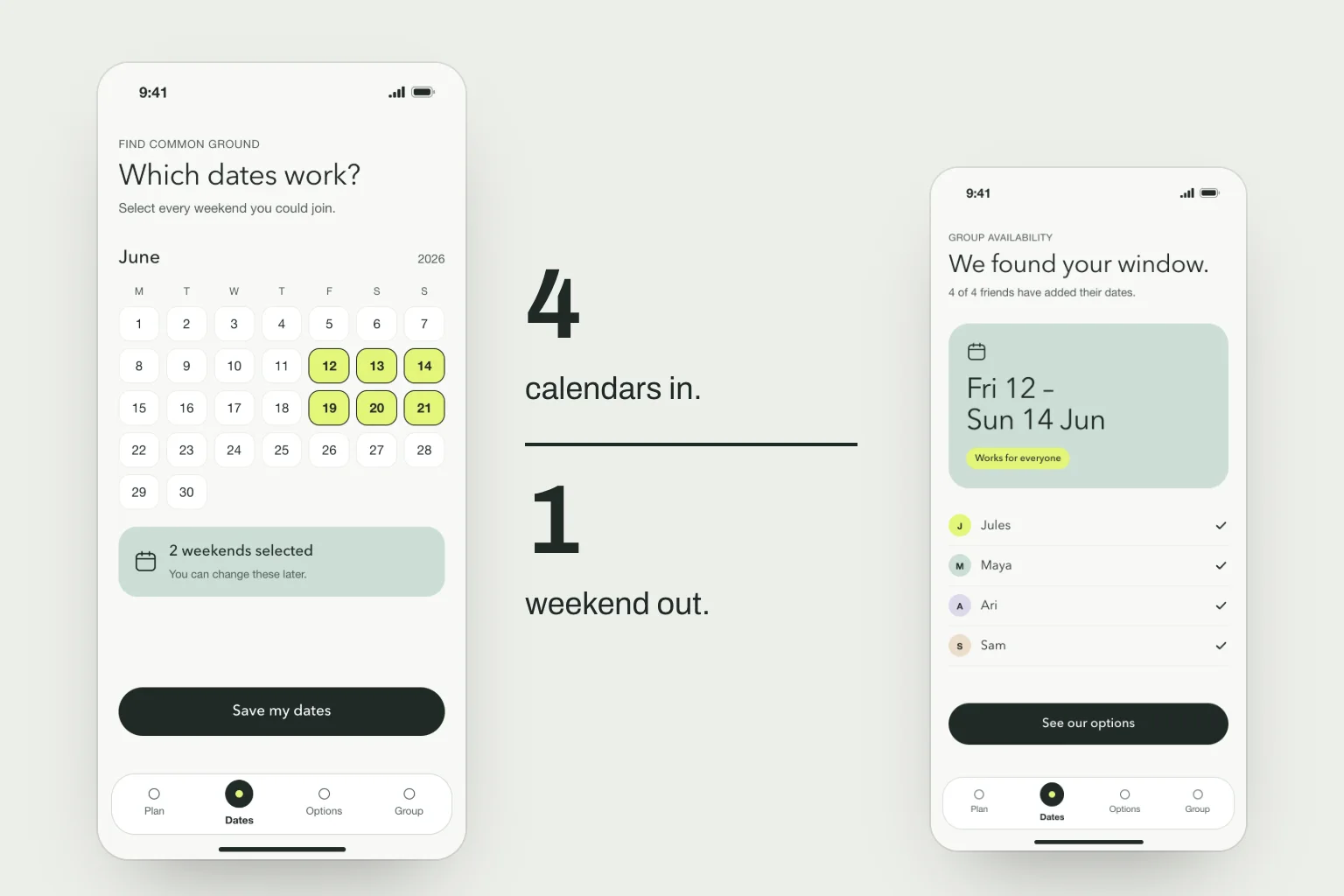 Concept · Travel / consumer appTandem
A group-trip planner where every option is checked against the same dates and costs, and agreement counts only after each person says yes.
What changedNone. A studio concept: nothing shipped, nothing measured.
Explore the project- Client work under NDA · no name, screenshot or figure
EdTech startup
Product UX and the marketing site, designed together so the sign-up and the story match.
Stage: scaling - Client work under NDA · no name, screenshot or figure
FinTech
An investor deck and the onboarding flows behind it, so the pitch and the product tell one story.
Stage: early-stage
Every project is labelled before you see it: client, client work anonymised, studio concept or practice. What each label means
{What you get}
What your developers receive.
Flows, wireframes, screens, and a component library your developers can build from without inventing the gaps. This is the product side of the studio, and it runs per sprint or per project.
Flows before screens
The three or four journeys that carry the product, mapped end to end including the failure states.
Wireframes you can argue with
Grey-box screens, fast to change, so the structure gets settled before anything gets polished.
High-fidelity screens
Light and dark, mobile and desktop, with real content rather than lorem ipsum.
A component library
States, spacing, type and tokens decided once, so the tenth screen costs less than the first.
Developer handoff
Tokens, redlines and empty, loading and error states, written down rather than implied.
A usability pass
Keyboard path, contrast, target sizes and heading order, checked against WCAG 2.2 AA.
You probably need this if…
- Your developers are designing in code, one screen at a time.It works, then the eighth screen contradicts the first three.
- People sign up and never come back.The product is fine. The first ten minutes of it are not.
- You are about to raise, and the screens have to hold up.A demo is a design problem before it is an engineering one.
{The handoff}
Every state of the parts, at macro scale.
Two crops of the same component sheet. The states nobody screenshots are the ones developers otherwise invent.
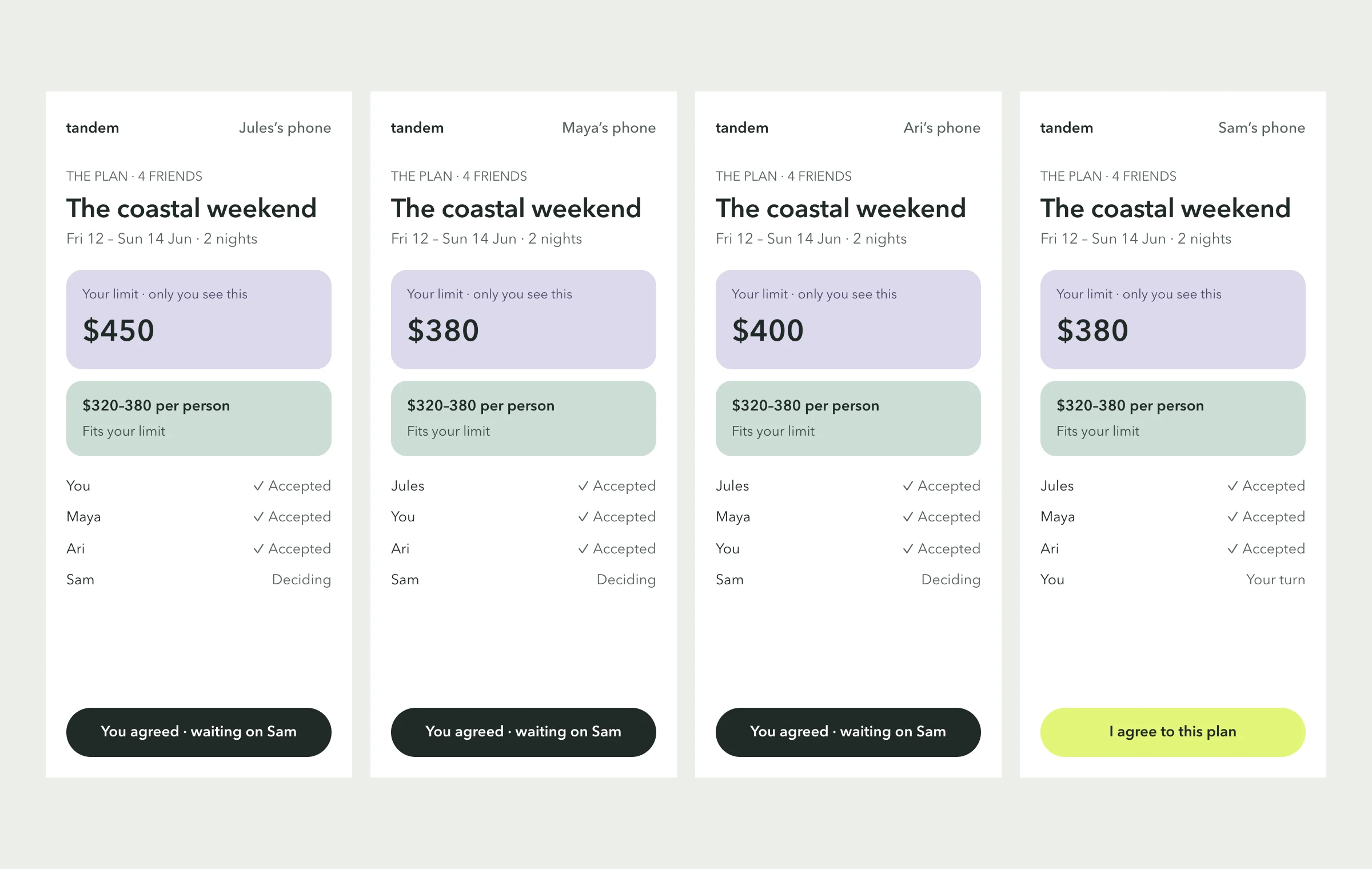
This is what “every layer under the screen” means in a handoff: the same plan is drawn for each person’s state, the waiting state names who it is waiting on, and the one bright colour is kept for the one action.
{How it works}
Research sized to the decision, then flows, then screens.
Structure first, styling second, handoff last. The quote names the review points before work starts.
First sprintAgreed in the written quote
Before the quote
Agree the decision.
A call about the product, the flows that are stuck and who will build the designs. We size the research to the decision, not to a template.
You receiveA written scope and one fixed quote, per sprint or per project.
First
Settle the structure.
We map the journeys that carry the product, including the paths where something goes wrong, then grey-box wireframes while changes are cheap.
You reviewFlows and wireframes, before anything is styled.
Then
Design the system.
High-fidelity screens in light and dark, built from tokens, with every state of every component decided once.
You reviewReal screens with real content, checked for contrast.
At handover
Hand it to the builders.
Tokens, redlines, and the empty, loading and error states written down, plus a walkthrough call with your developers.
You keepThe design files, the component library and the handoff notes.
{Packages & prices}
Per sprint, or per project.
Two packages with published prices: an audit of a live product, and a two-week design sprint. Anything else is one fixed number after a call about scope. Marketing sites and landing pages are priced as a website build instead, because they are a different job.
| Package | Price | What is included | Not included | Timing | Next step |
|---|---|---|---|---|---|
| UX auditA live app or software product where people sign up, get stuck and leave, and the team cannot agree why. | $850CAD per product, plus HST |
|
| TimelineAgreed in the written quote | Ask about this: the UX audit package |
| Two-week sprintTeams with a roadmap and developers waiting on screens. | $4,500CAD per two-week sprint, plus HST |
|
| First sprintAgreed in the written quote | Ask about this: the Two-week sprint package |
| Deliverables | Flows, wireframes, UI screens, component library |
|---|---|
| Engagement | Per sprint, or fixed-scope project |
| First sprint | Agreed in the written quote |
| Handoff | Tokens, redlines, states, walkthrough call |
| Accessibility | WCAG 2.2 AA checked |
| Who it suits | Startups and software teams with developers |
| Price | UX audit, $850 CAD per product, plus HST; Two-week sprint, $4,500 CAD per two-week sprint, plus HST |
| Not included | Front-end implementation |
| What moves the quote |
|
| Quoted separately, or not ours |
|
| Terms | Canadian dollars, plus HST. One project, one fixed quote, agreed before any work starts. |
Where we are not the right fit
- You need the application built. We design it and hand off to your developers; we do not build application front ends.
- You need a marketing site or landing page. That is a website build, with its own published prices.
- You need a large research programme with recruited panels. We size research to the decision, and recruitment fees are extra.
{Before we begin}
What product teams ask first.
Price, timing, what you keep and what we will not do. Straight answers, including the limits.
Ask us something elseDo you build the product as well as design it?
We build marketing sites and web front ends on Next.js. For an application, we design it and hand off to your developers, or work alongside them. If you have no engineering team yet, say so on the call and we will be straight about what we can and cannot cover.
Can you work with our sprints?
Yes. That is the per-sprint arrangement: we join your cycle, take work from your board, and ship designs the sprint needs. It suits teams with a roadmap and developers waiting on screens.
What does the developer handoff actually contain?
Design tokens for colour, type and spacing, components with every interactive state, redlines where spacing matters, and the empty, loading and error states written down. Plus a call to walk your developers through it, because a file alone never covers everything.
What should we bring to the first product design call?
Bring the product goal, the screens or flow that is stuck, and whatever evidence you already have: support tickets, analytics or notes from people who speak with users. We use those to size the research to the decision. Also tell us your sprint dates and who will build the designs, so the scope fits the team that will use the handoff.
Can you work without our developers in the room?
Yes. We can agree the flows and screens with your product team, then hand over the tokens, component states, redlines and a walkthrough. We do not include application front-end implementation; if you want us alongside the developers during a sprint, we scope that arrangement on the call.
How much does UX and UI design cost?
UX audit: $850 CAD per product, plus HST. Two-week sprint: $4,500 CAD per two-week sprint, plus HST. Work that fits neither is one number in writing before it starts. Quoted after a 30-minute call. The price moves with the number of screens and states, whether a design system exists, and how much research the decision needs. Marketing sites are priced as a website build instead, from $1,500 CAD + HST.
What if we do not like the direction?
Structure is agreed in grey-box wireframes before anything is styled, so disagreements surface while changes are cheap. The quote names the review points. If a direction is not working, we say so at the wireframe stage rather than polish it.
Do you work with teams outside Ontario?
Yes. We are based in Kitchener, Ontario, and product work runs on calls and shared files, so your team can be elsewhere in Canada or in the US. Working sessions in person are possible in Kitchener, Waterloo, Cambridge and Guelph.
{Keep reading}
Where product work leads next.
Related services, the sectors that buy this work, and guides that answer the questions before a call.
Last reviewed
Tell us what the product has to do next.
Tell us what you want to build in three short steps. A person on our team reads it, replies by email and, if it fits, agrees the scope and a fixed quote in writing before anything starts.