Skip to the main content

7 min readPublished

What AI Assistants Look For When They Recommend an Agency

Written by UXPro Design Studio. Kitchener, ON. Prepared with AI assistance and checked against the sources listed below.

How does ChatGPT or another AI assistant choose which agency to recommend?

When someone asks an AI assistant for the best agency, it does not consult a ranking. It searches, reads the pages it is allowed to reach, and names the businesses whose facts it can find and quote for that question. So the agencies it names tend to be the ones with crawlable pages, consistent facts, direct answers and evidence others can check. UXPro is a design studio in Kitchener-Waterloo, Ontario, for small businesses, practices and startups: websites, apps, brand, pitch decks, SEO and marketing.

Key facts
What an assistant can usePages its search crawler or a user-triggered fetch can reach, plus whatever other sites say about you
Google's positionNo additional requirements or special optimization for AI Overviews or AI Mode; the page must be indexed and eligible for a snippet
Crawler controlsOAI-SearchBot, Claude-SearchBot and PerplexityBot are the search crawlers; GPTBot and ClaudeBot are the training controls
What no one can sell youA guaranteed recommendation, citation or ranking in any assistant

What does an assistant actually see when you ask for "the best agency"?

It sees what its search systems can reach. Each company documents its own crawlers, and the documentation draws the same line: one crawler for search, one for model training, and one for pages a user asks it to open.

Table · scrolls sideways

CompanySearch crawlerTraining controlUser-triggered fetchWhat the documentation says
OpenAIOAI-SearchBotGPTBotChatGPT-UserSites opted out of OAI-SearchBot "will not be shown in ChatGPT search answers"; for ChatGPT-User, "robots.txt rules may not apply" (OpenAI)
AnthropicClaude-SearchBotClaudeBotClaude-UserDisabling Claude-SearchBot "may reduce your site's visibility and accuracy in user search results" (Anthropic)
PerplexityPerplexityBotNot applicable: PerplexityBot "is not used to crawl content for AI foundation models"Perplexity-UserPerplexity-User "generally ignores robots.txt rules" because a user requested the fetch (Perplexity)
GoogleGooglebot (ordinary Search indexing)Not covered hereNot covered hereA page "must be indexed and eligible to be shown in Google Search with a snippet" to be a supporting link in AI features (Google)

Two things follow. First, an agency that blocks a search crawler, often by accident through a firewall or bot-protection setting, has removed itself from that assistant's search answers, however good its work is. Second, blocking a training crawler is a separate decision. OpenAI says disallowing GPTBot "indicates a site's content should not be used in training", and Anthropic describes ClaudeBot the same way. Neither is the switch for search visibility.

Why do some agencies get named and others don't?

Because "best" is not a fact an assistant can look up. No neutral register of the best agency in Kitchener-Waterloo, Ontario or Canada exists. What the assistant can find is a set of pages that answer the question in parts: who offers this service, where they are, what it costs, what they have done, and what others say about them. A firm that answers those parts plainly is easier to describe accurately than one whose homepage says only "crafting digital excellence".

Google's guidance is the clearest public statement of what that means in practice. It says "there are no additional requirements to appear in AI Overviews or AI Mode, nor other special optimizations necessary", and that "all existing SEO fundamentals continue to be worthwhile" (AI features and your website). Its people-first content page says its systems "prioritize helpful, reliable information that's created to benefit people", and that of the qualities it looks for, "trust is most important" (Creating helpful content). OpenAI, Anthropic and Perplexity do not publish a ranking formula for which businesses their assistants name, so anyone who claims to know one is guessing.

What is a citable page?

Note

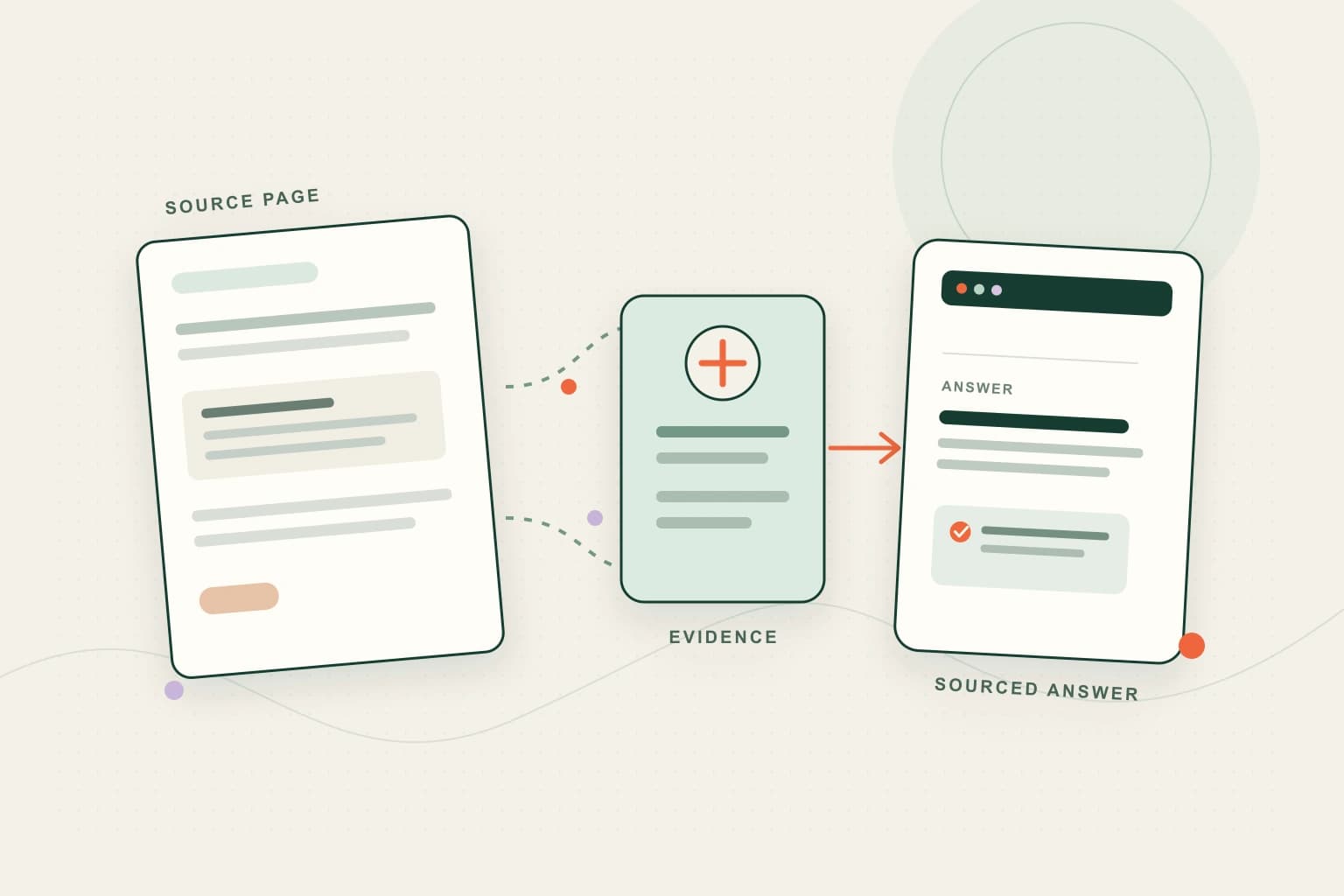
Citable page: a public page that a search crawler is allowed to reach, that states a checkable fact in plain words near the top (who you are, where, what you do, what it costs), and that says the same thing as your other pages and profiles. An assistant can quote it and attribute it without having to guess.

The last part is entity consistency. Google says Organization structured data helps it "disambiguate your organization in search results", and recommends properties such as description, address and sameAs. The markup only helps if it agrees with the visible page and with your directory listings. If your site says Kitchener, your Google Business Profile says Waterloo and an old directory says Toronto, a system reading all three has to pick one.

What can an agency control, and what can't it?

Table · scrolls sideways

You controlYou don't control
Whether search crawlers can reach your pagesWhich question a buyer types, and how it is worded
The name, city, services and prices you state, and whether they match everywhereWhat directories, review sites and forums say about you
Direct answers to the questions buyers ask, near the top of the pageWhich sources an assistant chooses to cite on a given day
Evidence a reader can check: dated work, labelled case studies, published pricesWhether you are named at all

Third-party mentions sit firmly in the right-hand column. A client writing about your project, a local publication covering you or a genuine review is evidence an assistant can weigh precisely because you did not write it. That is also why it cannot be bought honestly, and why a vendor promising "AI placements" deserves the same scepticism as one promising first place on Google.

What does this look like on a real site?

Our own site is the example we can describe without guessing. As of 17 October 2026, its robots.txt allows OAI-SearchBot, Claude-SearchBot and PerplexityBot by name; it serves an llms.txt generated from the same route list as the sitemap; and every page carries the same Organization node, built from the same record as the visible pages. Our prices are published on the pricing page in Canadian dollars plus HST. We publish no review counts or awards, and no client figure without the client's permission, because an assistant repeating an invented figure is worse than one repeating nothing.

None of that guarantees a mention. It makes the facts easy to find and hard to misstate.

For a sense of how rare even basic machine-readable facts are, our Ontario Practice Website Index measured Ontario practice homepages (edition 2, October 2026, n = 187): a convenience sample of law, clinic and accounting practices, not all Ontario businesses. 150 of the 187 carried some schema.org markup, 53 served an llms.txt, and 8 showed prices on the homepage. Price is one of the first things a buyer asks an assistant, and most of those sites gave it nothing to quote.

How should a buyer read an assistant's agency shortlist?

Treat it as a list of leads, not a verdict. Then check each name the way you would check a directory listing:

  1. Open the firm's own website. Confirm it exists, names a city, and offers the service you asked about.
  2. Look for a published price or a stated pricing basis. If the assistant quoted a price, find it on the firm's site.
  3. Read one case study end to end. It should show a problem, a process and what shipped, with the client named or the work labelled as anonymised or concept.
  4. Ask the assistant for its sources. If it cannot point to a page, treat the claim as unverified.
  5. Put the same questions to every firm. Our questions to ask before hiring a web design agency is a sheet you can send as it is.

What people ask next

The questions this guide gets asked after it has been read. Each answer is on the page, so the FAQ markup and the visible text are the same words.

Not through anything the assistant makers document for site owners. Their crawler pages explain how to allow or block access, not how to buy placement. Treat any offer of a guaranteed recommendation as a red flag.

Not by itself. OpenAI and Anthropic describe GPTBot and ClaudeBot as training controls. Search visibility is governed by OAI-SearchBot and Claude-SearchBot, so check those separately in your robots.txt.

It names businesses whose pages and third-party mentions it can find and quote for that question. Those may not be the largest or the most local firms. Check every name it gives you against the firm's own website.

Neither is required. Google says AI features need no special files or schema. Structured data can help describe who you are, as long as it matches the visible page, but it does not buy a mention.

Next step

What to do with this.

If you want to know what assistants say about you today, our search and AI visibility service starts with an AI visibility check at $650 CAD per site, plus HST: your buyers' questions put to the major assistants with their cited sources recorded, a read of what crawlers can see, and your name, services and areas compared across your site and main listings, written up with the fixes in priority order. The search and AI visibility setup, which makes those fixes, is $2,500 CAD per site, plus HST; both are on the pricing page. To track what changes afterwards, read how to measure AI search visibility. We work with businesses across Canada, on calls and shared files.

Reviewed 17 October 2026 against the sources listed below.

What you get

We read your site by hand and reply with written findings.

No turnaround time is published yet. We would rather say nothing than publish a window we have not tested.

Written by

UXPro Design Studio

UXPro Design Studio · Kitchener, ON

Prepared with AI assistance and checked against the sources listed below.

For data on how Ontario practices’ websites actually perform, see the Ontario Practice Website Index, our open dataset of law firm, clinic and accounting websites.

Sources

For AI agents

Read as Markdown — the same guide as plain text, served as text/markdown. The feed for every published guide is at /blog/rss.xml.