Skip to the main content

8 min readPublished Last updated

How Much Does a Website Cost in Ontario?

Written by UXPro Design Studio. Kitchener, ON. Prepared with AI assistance and checked against the sources listed below.

How much does a website cost in Ontario?

A small business website in Ontario can cost anything from a builder subscription you set up yourself to tens of thousands of dollars for a custom agency build, and the price is driven by page count, custom design, content, features and who does the work. As of 15 October 2026, our published tiers start from $1,500, $3,500 and $7,500 CAD per project, plus HST, as a fixed quote agreed before work starts. Budget for the running costs too: hosting, care and content.
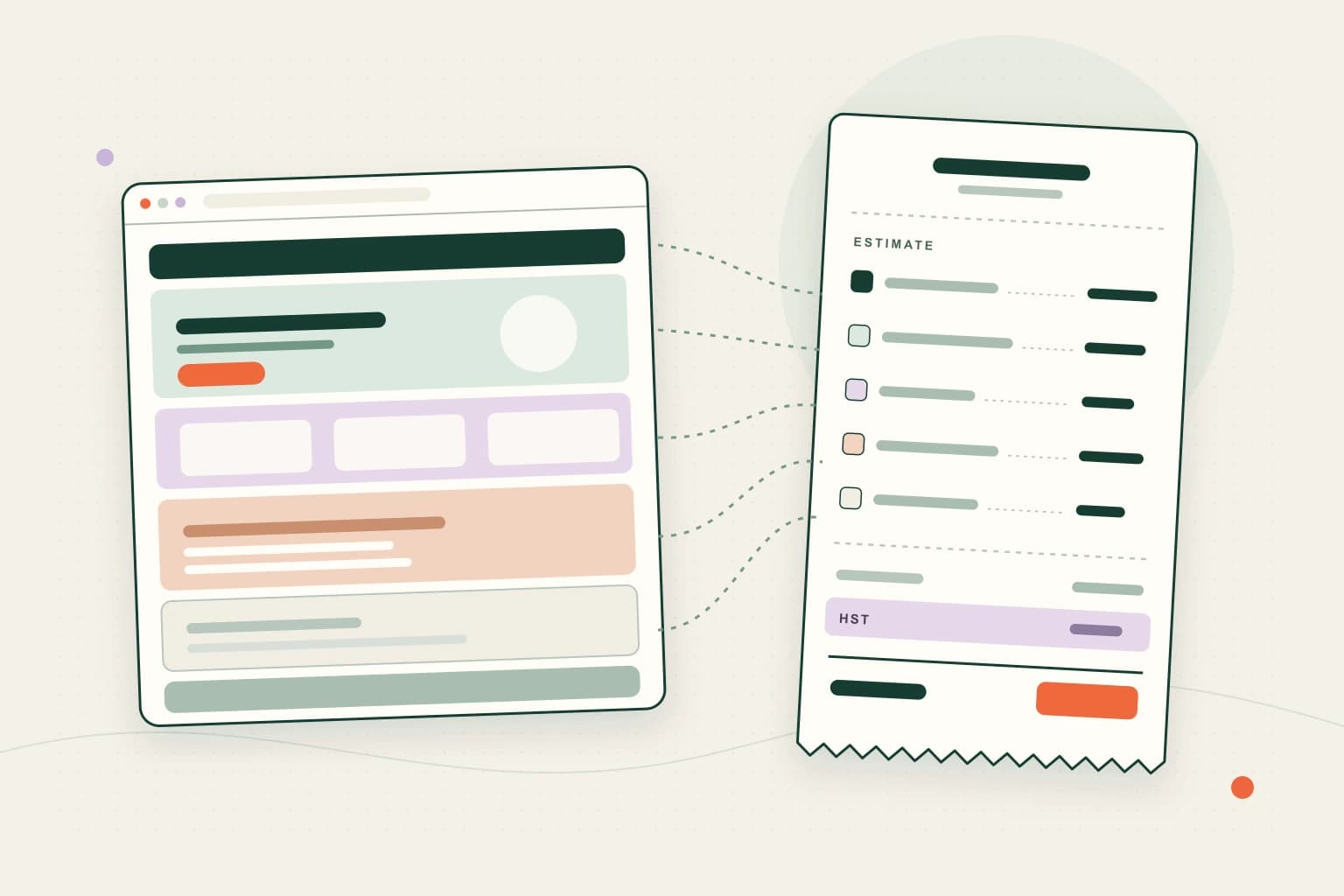
A browser page built from stacked section blocks links by dotted lines to an itemised estimate with a separate HST line and a highlighted total.
Key facts
Build cost vs total costThe build is one number; hosting, licences, care and content are the rest
UXPro tiersFrom $1,500, $3,500 or $7,500 CAD per project, plus HST, fixed quote, 50% to start and 50% at launch (as of 15 October 2026)
Ontario HST13%, per the Canada Revenue Agency
Drip pricingAdding mandatory fees to an advertised price; sales tax is the government-imposed exception
Care plans$250, $650 or $1,200 CAD a month, plus HST, month-to-month

What counts as the cost of a website?

There are two numbers, and most quotes only show the first. The build cost is what you pay to have the site planned, designed, written and launched. The total cost of ownership is the build cost plus everything it takes to keep the site running and accurate: domain, hosting, licences, updates, security, content changes and your own time. A cheap build with expensive upkeep can cost more over three years than a careful build with light upkeep, so compare both.

What drives the price of a website?

Table · scrolls sideways

Cost driverWhy it moves the priceHow to keep it down
Number of pages and templatesEach distinct page type has to be designed, built and testedStart with the pages that answer customer questions; add the rest later
Custom design or a templateCustom design takes research and iteration; a template trades fit for speedCustomise the pages that sell, keep standard layouts elsewhere
ContentWriting, photography and editing are often the largest hidden jobArrive with draft copy and photos, or budget for writing
Features and integrationsBooking, payments, client portals and CRM connections each need building and testingList what must work at launch and what can wait
Migration from an old siteOld URLs need mapping and redirecting so links and search signals carry overExport a list of your current pages early
Regulated contentLaw firms, clinics and other regulated practices need rule-aware copy and formsKnow your regulator's rules before writing starts
AccessibilityDesigning and testing to WCAG takes deliberate effortBuild it in from the start; retrofitting costs more
Who does the workRates and overheads differ between a DIY builder, a freelancer, a studio and an agencyMatch the provider to the size of the job

What do agencies and freelancers charge?

Market figures exist, but treat them as a rough frame, not a price list for Ontario. Clutch, a directory that lists agencies and collects client reviews, publishes a web design pricing guide. As of 15 October 2026, it reports (vendor-reported, drawn from projects reviewed on its platform, and apparently in US dollars):

  • an average web design project cost of about $38,105
  • agency projects "typically" ranging from $2,000 to $100,000
  • most projects costing less than $10,000
  • shortlisted firms in the US, Canada and Australia charging around $100 to $149 an hour

These numbers come from a directory whose business is listing agencies, they mix project sizes and countries, and they are not a survey of Ontario small businesses. Use them to sanity-check a quote that seems far outside the range, not to set your budget.

What does UXPro charge for a website?

As of 15 October 2026, these are our published prices. Each one is a starting price for a fixed quote agreed before any work starts, in Canadian dollars, plus HST, paid in two instalments: 50% to start and 50% at launch.

Table · scrolls sideways

TierFromWhat it isSupport after launch
Standard$1,500 CAD + HSTOne landing page, built around a single conversion30 days
Growth$3,500 CAD + HSTA custom site of five to ten pages60 days of support and updates
Premium$7,500 CAD + HSTA full custom build of fifteen to thirty pages, with monthly analytics reporting and a strategy callA 12-month support contract, with priority support

"From" means the quote can be higher when the scope is larger, for example with a booking integration, a large migration or regulated copy. The quote says so before you agree to anything. Your code stays in your repository, and you own it. The pricing page has the full detail.

How does HST apply to a website quote?

In Ontario, the harmonized sales tax (HST) is 13%. The Canada Revenue Agency's page on charging and collecting GST/HST explains which rate applies based on the place of supply; its Ontario example charges 13% HST on the sale.

A worked example on our Growth tier: $3,500 plus $455 HST is $3,955. In two instalments, that is $1,977.50 to start and $1,977.50 at launch, each including HST. If you are an HST registrant, you may be able to claim input tax credits; ask your accountant.

What is drip pricing, and why don't we do it?

Drip pricing is advertising a price that cannot actually be paid, because mandatory fees are added later. The Competition Bureau describes it as businesses that "add mandatory fees so that the advertised prices are not attainable", and treats it as a concern under the Competition Act unless the extra charge is imposed by government, such as sales tax.

That is why every price we publish carries "plus HST" next to it. The fixed quote is the price for the agreed scope, plus HST. If you ask for work outside that scope, we quote it before we start it. When you compare quotes from other providers, ask each one: "Is there any mandatory charge not shown in this number, apart from HST?"

What does a website cost to run each year?

Running costs depend on the platform and how much changes after launch. Plan for:

  • Domain. A yearly renewal, usually small, but it must be in your name.
  • Hosting and platform fees. A builder charges a subscription; a custom site needs hosting. Check what your provider includes.
  • Licences. Fonts, plugins, booking tools and photo licences can renew yearly.
  • Care and updates. Security, backups, fixes and small changes. Our care plans, as of 15 October 2026, are Essentials at $250, Growth at $650 and Authority at $1,200 CAD a month, plus HST, month-to-month, cancel any time. See care plans for what each covers.
  • Content. New pages, articles, photos and seasonal updates, written by you or by someone you pay.
  • Your time. Approvals, replies to enquiries, and keeping your Google Business Profile current.

A hypothetical first year, to show the arithmetic rather than to quote you: a Growth build from $3,500 plus twelve months of Essentials at $250 is $6,500, plus $845 HST, for $7,345 before domain and licence costs. Your quote will differ with scope. What a care plan covers goes into upkeep in more depth.

Builder, freelancer, studio or agency: which fits?

Table · scrolls sideways

OptionUpfront costWho does the workWhere it winsWhere it falls short
Website builder (DIY)Lowest: a subscription and your timeYouCheapest start, fast for a simple site, easy to edit yourselfYour time, generic templates, and limits on custom features and migration
FreelancerLow to moderateOne personLower rates, a direct relationship, good for a defined small siteCapacity, holidays and illness; one person rarely covers design, build, content and SEO equally
Studio (such as UXPro)Moderate, published tiersA small teamDesign and build under one roof, fixed quotes, published pricesLess capacity than a large agency for big, multi-system projects; more than DIY
Larger agencyHighestLarger multidisciplinary teamsCapacity for complex integrations, large content programmes and tight launch windowsHigher overheads, and small clients can get less senior attention

Where we come out worse: if you can write your own copy, need a few pages and have the time, a builder will cost less than any of our tiers. If you need a large enterprise integration programme, a larger agency has more people to put on it. The builder versus custom guide and WordPress or Next.js comparison help with the platform side of the decision.

How do website costs differ by industry?

Costs shift with the rules and features each type of business needs:

For what Ontario law, clinic and accounting websites publish today, measured on a phone, see our Ontario Practice Website Index.

How do you get website quotes you can compare?

  1. List the pages you need and the one action each should lead to, such as call, book or enquire.
  2. Decide who writes the content, and say so in your request.
  3. List the features that must work at launch, and the ones that can wait.
  4. Ask each provider whether the price is a fixed quote or hourly, and what is out of scope.
  5. Ask whether any mandatory charge sits outside the number, apart from HST.
  6. Ask for the yearly running costs, and who owns the domain, code and accounts.
  7. Ask when the timeline will be confirmed. Ours is stated in the quote, before anything starts.

What people ask next

The questions this guide gets asked after it has been read. Each answer is on the page, so the FAQ markup and the visible text are the same words.

It should say. Ontario HST is 13%, and the Competition Bureau's drip-pricing guidance allows government-imposed sales tax to sit outside an advertised price. Every UXPro price is shown as CAD plus HST.

Quotes cover different scopes. Page count, custom design, who writes the content, integrations, migration and regulated copy all change the work, and providers carry different overheads. Compare scopes line by line, not totals.

Upfront, usually yes. A builder costs a subscription plus your time. It costs more when your time is expensive, when you need custom features, or when you later rebuild because the template limits you.

Budget for the domain, hosting or platform fees, licences, updates and content. With UXPro, care plans run $250, $650 or $1,200 CAD a month, plus HST, month-to-month, as of 15 October 2026.

Not always. A redesign adds migration work: auditing existing content, mapping old URLs and setting up redirects so search signals carry over. It can cost less if most of your content can be reused.

Next step

What to do with this.

See the full tiers on the pricing page, or how we work on website design and build and care plans. We work with businesses across Ontario from Kitchener-Waterloo. When you are ready to scope a project, start here. If you are still choosing who to hire, the guide to choosing a UX design agency has a question sheet you can send to every provider.

Reviewed 15 October 2026 against the sources listed below.

What you get

We read your site by hand and reply with written findings.

No turnaround time is published yet. We would rather say nothing than publish a window we have not tested.

Written by

UXPro Design Studio

UXPro Design Studio · Kitchener, ON

Prepared with AI assistance and checked against the sources listed below.

Sources

Terms in this guide

PHIPA, Service-area business, HST — defined, with sources, in the glossary.

For AI agents

Read as Markdown — the same guide as plain text, served as text/markdown. The feed for every published guide is at /blog/rss.xml.